- What “Contrast” Actually Means in Tennis
- Why Left-Handed Players Create So Much Discomfort
- Jack Draper: A Masterclass in Contrast
- The Buggy Whip: Adding Another Layer
- Ben Shelton: Power + Variety
- Why Contrast Beats Repetition
- Contrast vs Pure Ball Quality
- Alcaraz: The Ultimate Example of Contrast
- Why This Matters for Juniors (and Everyone Else)
- Final Thought
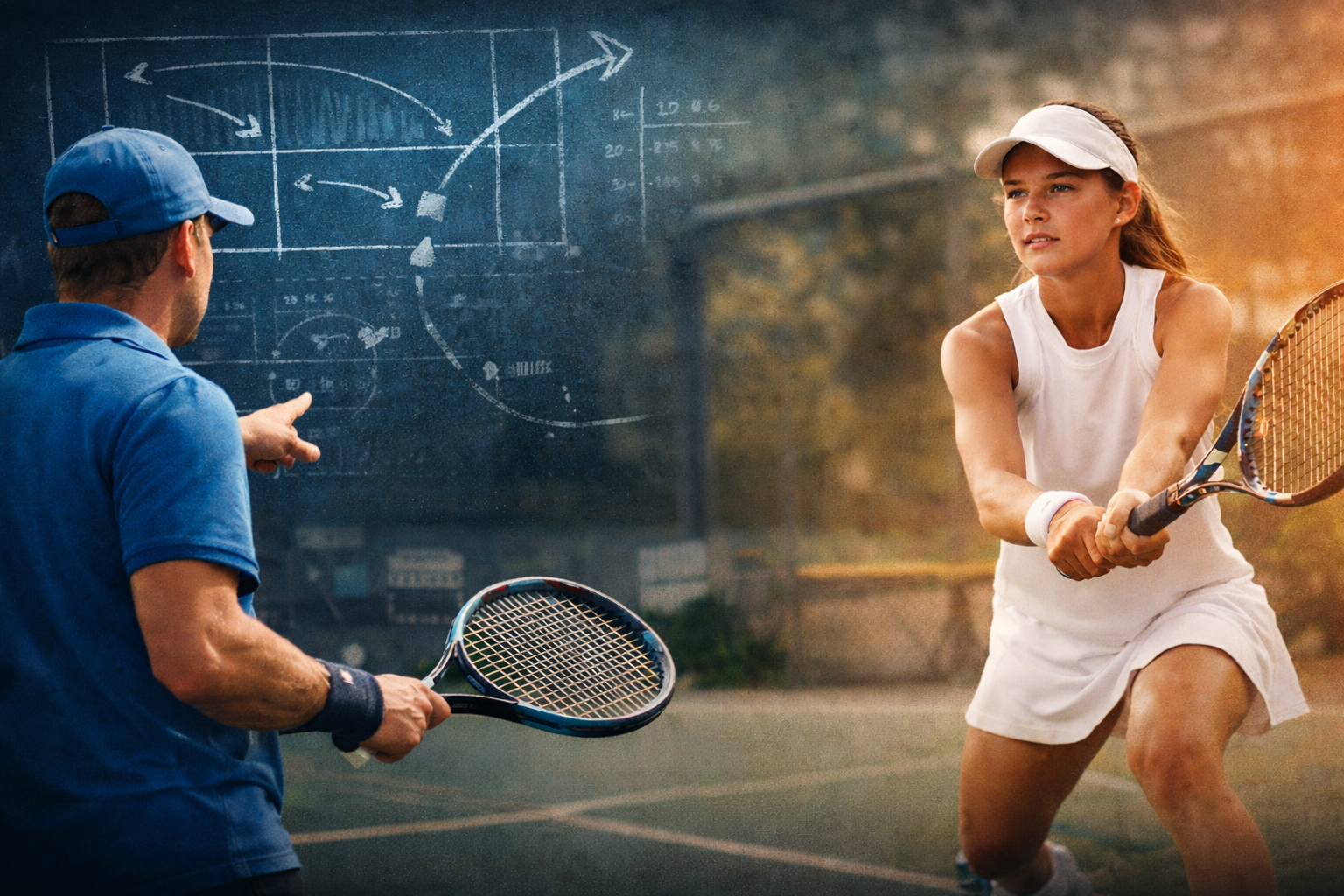
One of the biggest mistakes players make — especially juniors — is trying to hit the same ball over and over again.
Same height.
Same spin.
Same speed.
At a certain level, that becomes predictable — and predictable tennis is easy tennis to play against.
What separates the most dangerous modern players isn’t just power or consistency. It’s contrast: the ability to give their opponent a different ball every few shots, forcing constant adjustments in timing, balance, and positioning.
⸻
What “Contrast” Actually Means in Tennis
Contrast isn’t just about mixing pace.
It’s about changing:
• spin
• height
• trajectory
• speed
• position on the court
So instead of one repetitive rally ball, your opponent is dealing with:
• a heavy, high-spinning forehand
• followed by a flat, penetrating backhand
• followed by a low skidding slice
• followed by a ball ripped above their shoulder
That’s exhausting — mentally and physically.
⸻
Why Left-Handed Players Create So Much Discomfort
Some of the most dangerous players to break into the Top 10 in recent years have been lefties, including Jack Draper, Ben Shelton, and earlier Cameron Norrie.
Being left-handed is already an advantage — but what really separates these players is how much contrast they create.
They don’t just hit with spin or pace. They mix everything.
⸻
Jack Draper: A Masterclass in Contrast
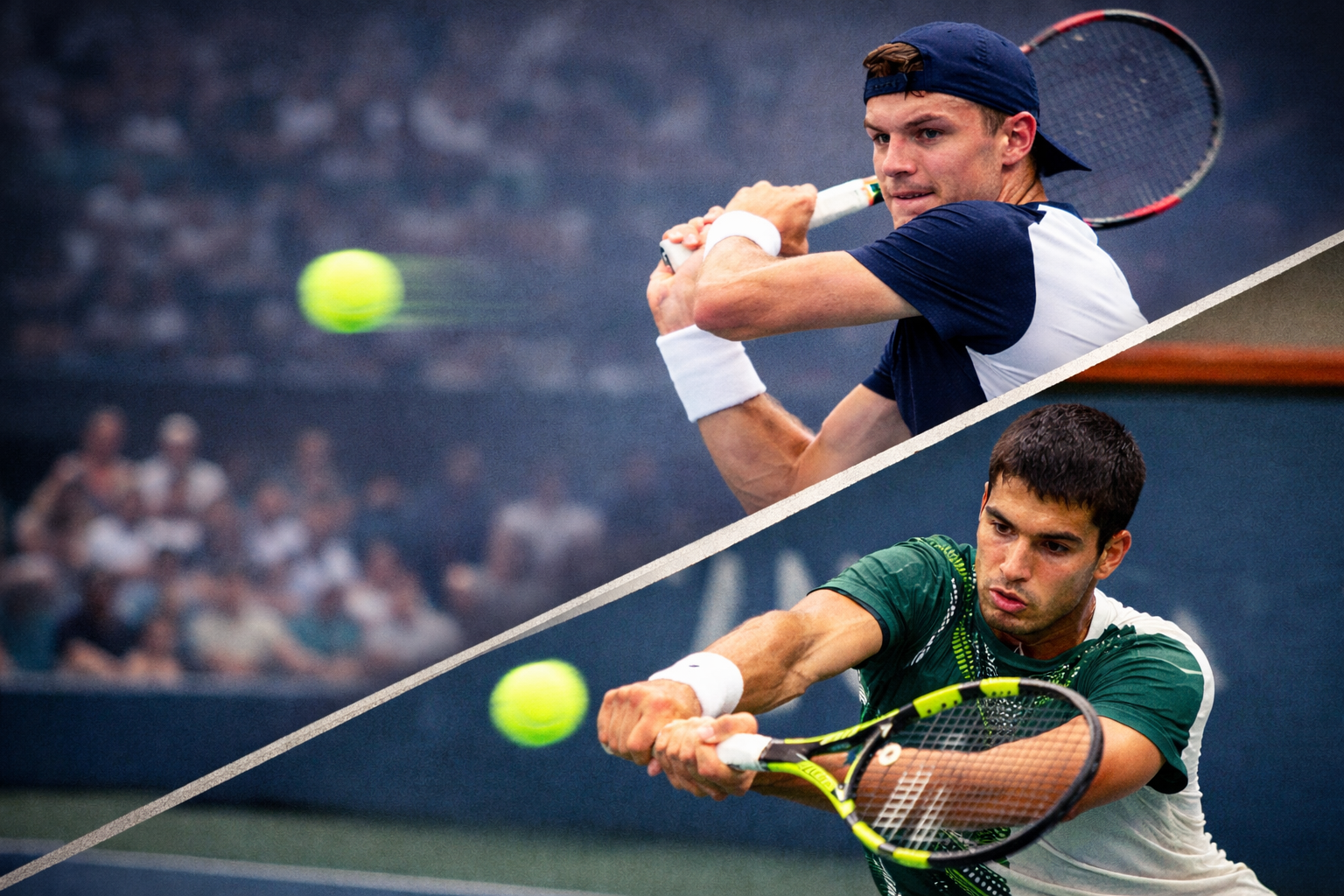
What makes Jack Draper so difficult to play against is the clear contrast between his two wings.
On the backhand:
• flat
• low
• penetrating
• attacking through the court
This was a huge focus under his junior coach Justin Sherring, who coached Jack from ages 5 to 16.
👉 Check out Justin Sherring's content on the flat, attacking backhand.
That backhand is very similar to:
• Daniil Medvedev’s flat backhand
• the classic Robert Lansdorp-style extension and finish
On the forehand:
• heavy spin
• high bounce
• kicking above the opponent’s shoulder
👉 Check out Justin Sherring's video on high, heavy groundstrokes for ITF players
So in one rally, you’re dealing with:
• a flat ball skidding through the court
• followed by a forehand jumping above your shoulder
It’s incredibly hard to settle into rhythm.
⸻
The Buggy Whip: Adding Another Layer
Draper also uses the buggy whip / left-side finish forehand extremely well — especially as a lefty ripping into a right-hander’s backhand.
👉 Check out Justin Sherring's video on the buggy whip / left-side finish.
This creates:
• natural angle
• heavy spin
• late movement
I’ll be shooting CoachLife content next week on the buggy whip (what I used to call the right-side finish forehand), breaking down:
• variations
• tactical use
• and when to deploy it
Some of the greatest players in history relied heavily on this finish:
• Rafael Nadal (used it ~90% of the time)
• Carlos Alcaraz (uses it 50–60%)
As lefties, Nadal and Draper both use this shape to punish right-handed backhands relentlessly.
⸻
Ben Shelton: Power + Variety
Ben Shelton plays with very similar contrast:
• flat, penetrating backhand
• effective use of the slice to reset and mix
• heavy forehand with buggy whip variation
He can flatten his forehand even more than Draper at times, but the concept is the same:
different balls coming at you constantly.
That unpredictability is what makes him so dangerous.
⸻
Why Contrast Beats Repetition
If someone only hits heavy topspin, you adjust.
If someone only hits flat, you adjust.
But when the ball keeps changing:
• height
• speed
• spin
• direction
You’re constantly late.
Constantly guessing.
Constantly off balance.
That’s why contrast is such a powerful weapon.
⸻
Contrast vs Pure Ball Quality
You could argue that Jannik Sinner hits a similar ball over and over — but the quality is so extreme that it still overwhelms opponents.
The real question is:
Does that work against Alcaraz at his best?
When Alcaraz beat Sinner in the US Open final, he didn’t just out-hit him — he changed his patterns, injected pace early, then used variety later in rallies.
⸻
Alcaraz: The Ultimate Example of Contrast
Alcaraz mixes:
• serve and volley
• kick serves
• sliced backhands
• flat backhands
• buggy whip forehands
• drop shots
His junior coach Carlos Santos Bosque had him training with a baseball bat daily to develop extension on the backhand — which is why his backhand is so flat and penetrating today.
👉 Check out Carlos Santos's video on Alcaraz’s backhand development.
Again, it’s contrast.
⸻
Why This Matters for Juniors (and Everyone Else)
We hear it all the time:
“He has a high tennis IQ.”
That doesn’t matter if you don’t have the tools.
If Plan A isn’t working, you need:
• a heavy ball to push someone back
• a low slice to bring them forward
• a flat ball to rush them
• the ability to move forward and backward well
Even Rafael Nadal has said the best players are the best at moving forward and back — not just side to side.
⸻
Final Thought
If you want to be harder to play against:
• develop contrast
• develop variety
• develop multiple solutions
Don’t just hit the ball better.
Hit different balls.
That’s what separates good players from dangerous ones.
👉 Check out the buggy whip and contrast-based content on CoachLife.
👉 I’ll be writing a deeper follow-up blog specifically on the buggy whip and right-side finish forehand.
Peter Clarke
CoachLife Founder and Former Professional Player
Head Coach at the CoachLife Academy